
RB GRADE RECEIPT
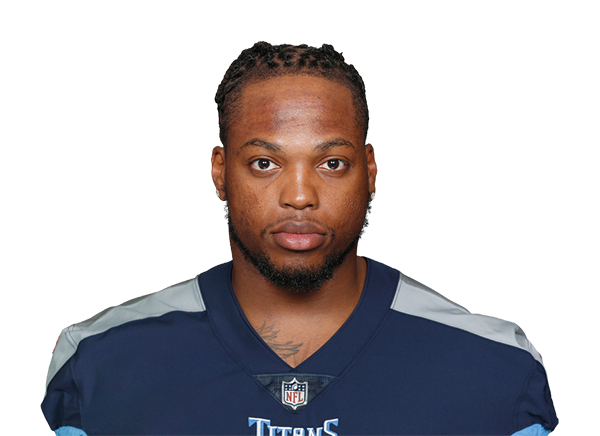
Derrick Henry
Baltimore Ravens / First-unit backfield role; share unresolved / Healthy
Models: player-forecast-v41 / player-performance-v18 / team-strength-v42Context: coaching-context-v1 Data updated: November 9, 2026 at 8:22 AM ESTVerify live snapshot Verify release manifest Verify deployment
2026 CURRENTCurrent productionHIGH confidence
CURRENT PERFORMANCE76.8B
Separate forecast OVR: 83.0. Team impact: 81.0.CURRENT PRODUCTION RANK#13 of 26 (current)187 current-season plays; source through week 9. Production does not establish complete assignment quality.
What the evidence supports
Statistical production, fantasy scoring and player execution are different targets. Read the position-specific evidence before comparing players.
Context still needed: blocking versus runner-created yards; pass protection; goal-line and two-minute role.
SCORE KEY
Current performance comes first
Current grade measures qualifying production recorded this season against position peers, with sample adjustment. It is not complete football ability. Without qualifying current evidence, a clearly labeled forecast estimate remains visible. Defensive assignments and individual blocking require additional evidence.
2026 PRODUCTION CONTEXT
Talent, opportunity, coaching, and availability kept separate
Derrick Henry's central production outlook stays at the evidence-based baseline; tracked context affects uncertainty only. This is a downstream production index, not a rewrite of the 83.0 player OVR.
82.1 base production82.1 context adjusted0.0 context delta70.8-93.4 heuristic planning range
Open context effects and weekly opponent policy
Uncertainty: Declan Doyle transition carries high uncertainty.
Position contract: rb-production-context-v1 · coaching gate TESTED WITHHELD.
Position coaching driver: Offensive play caller, run design, backfield rotation, target share, and goal-line usage.
Season levers: position schedule · verified touch plan · committee depth · goal-line role.
Weekly matchup levers: opponent run defense · box environment · projected score state · target opportunity · weather.
Injury and workload levers: touch cap · managed workload · return-to-play ramp · active backup allocation.
Validation state: RB play-caller usage was tested, but player-level gains were not stable in every fold. Verified workload receipts can still move opportunity directly.
Weekly opponent layer: Opponent defense, opposing coordinator, likely score state, venue, weather, and final game designation are recomputed in the weekly projection. They do not rewrite player OVR or this season baseline.
Receipt: player-production-context-v1 · coaching player-coaching-usage-v1 · workload fantasy-workload-context-v2
PLAYER SIGNALS
Scouting tags with receipts
COOLING OFFtrend
Position-relative season score fell 14.8 points from 2025 to 2026.
Descriptive signal · zero direct grade impact🎓 Top Prospectathletic
NFL.com draft grade: 86.68
Descriptive signal · zero direct grade impact📍 Limited roleathletic
Played 55% of available team snaps
Descriptive signal · zero direct grade impact🚀 Explosiveathletic
Broad jump: 130.0"
Descriptive signal · zero direct grade impact🦅 Longathletic
arms 33.0"
Descriptive signal · zero direct grade impactSEPARATE FORECAST RECEIPT
Supporting forecast inputs
Quality starter forecastvalidated three-season running back forecast
These inputs reproduce the separate 83.0 forecast OVR, not the current-season headline grade. Team impact remains a separately evaluated roster input.
Current-team impact: 81.0. This forecast-heavy value feeds the Baltimore Ravens roster model after role and availability treatment.
Rank gate: Position-specific sample threshold met. Sample progress: 100%.
Uncertainty: One decimal supports ordering; the range is a heuristic, not a calibrated confidence interval. Typical next-season absolute error is 8.3 points; empirical interval coverage has not yet been calibrated.
Open exact supporting signals
Recent production · 0%81.4
Rate-based production signal · 0%80.5
Next-season projection · 100%83.0
Model receipt
RB production uses EPA per touch, first-down rate, workload, RYOE, contact balance, scoring, and lost-fumble rate.
The displayed performance component is recency-weighted across qualifying 2026, 2025, 2024 seasons.
Projection uses roster role plus verified prospect evidence when available.
Prospect pedigree and testing are context only after the early-career prior expires; qualifying NFL production is authoritative.
The projection component uses the validated three-season running back forecast because it outperformed the prior forecast in the 2024-2025 walk-forward audit.
2026 PERFORMANCE
Position-specific metrics
42nd percentile
43rd percentile
79th percentile
46th percentile
64th percentile
60th percentile
51st percentile
PLAYER-CREATED VALUE
Opportunity-neutral indicators
This facet removes role-volume fields where the public data supports it, so targets, touches, and snap share do not masquerade as ability.
42nd percentile
43rd percentile
46th percentile
64th percentile
51st percentile
60th percentile
Positive signal recent-form input187 qualifying plays